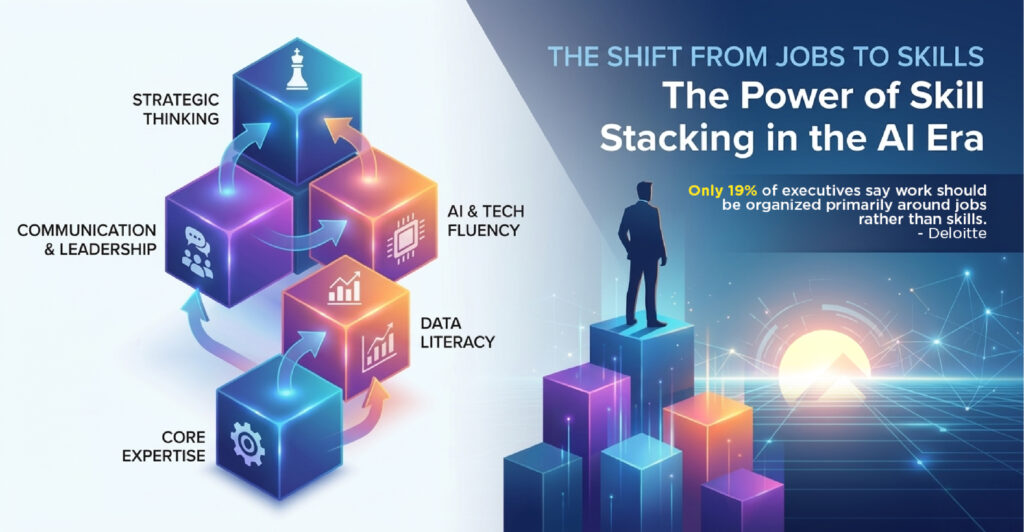
The Shift from Jobs to Skills
For many years, careers were defined by job titles and fixed responsibilities. Today, that model is changing. Organizations are increasingly shifting toward skills-based work, where capabilities and expertise matter more than rigid roles.
As Deloitte notes in its Human Capital Trends Research, “only 19% of executives say work should be organized primarily around jobs rather than skills.” This shift reflects a fundamental change in how talent is developed. Instead of focusing solely on roles, companies are prioritizing skills, capabilities, and learning agility.
2)The Growing Skills Gap
While technology adoption continues to accelerate, workforce capabilities are not always keeping pace. Many organizations now face a widening skill gap, where emerging technologies outpace the ability of employees to adapt quickly enough. This means the ability to learn, unlearn, and relearn is becoming one of the most important skills professionals can develop
In the Asia Pacific region, talent shortages remain intense in 2026, with 71% of employers reporting difficulty filling roles. Emerging capabilities such as AI model development and AI literacy have overtaken traditional IT skills as the hardest to find, underscoring the urgent need for targeted and continuous workforce development.
According to Amazon Web Services research, advanced digital capabilities such as cloud architecture and software development have the potential to add an estimated $6.3 trillion to the global economy annually, driven by higher productivity and improved worker incomes.
3) The Rise of Digital Learning Ecosystems
Modern learning platforms have evolved far beyond static course libraries. Organizations are increasingly building digital learning ecosystems that combine expert-led instruction, technology certifications, hands-on labs, and personalized learning pathways.
According to LinkedIn Learning, 89% of learning leaders believe skill development is essential for navigating the future of work, highlighting the growing importance of structured learning platforms.
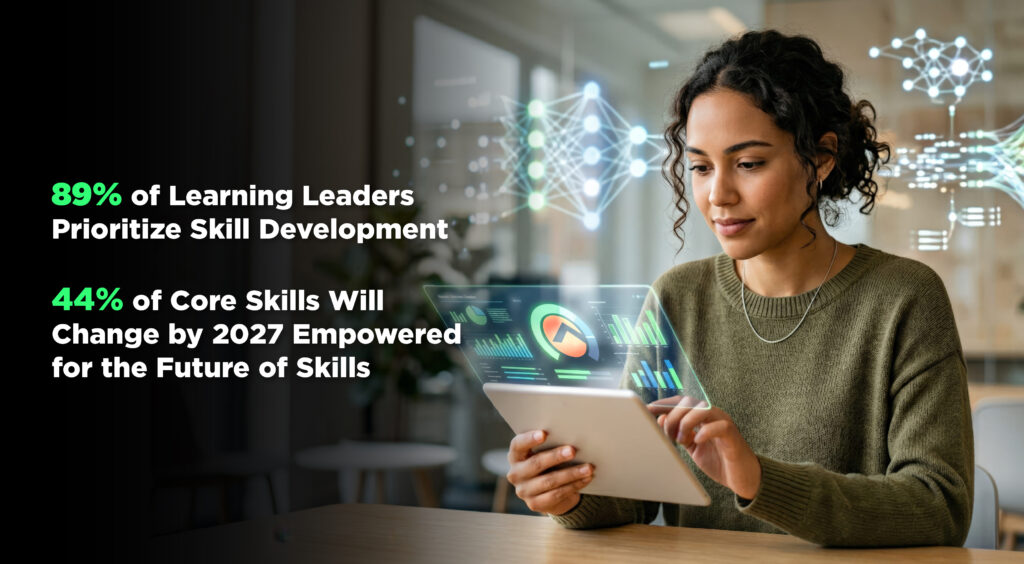
At the same time, research from the World Economic Forum indicates that 44% of workers’ core skills will change by 2027, driving organizations to adopt more adaptive and technology-enabled learning environments.
Trainocate’s Empowered platform helps broaden access to digital skills by delivering flexible, industry-relevant training that enables professionals and organizations to stay competitive in an increasingly technology-driven world.
Elevate your potential with the power of continuous learning.
Learn more: https://marketing.trainocate.com/empowered